
Homemade Ice Cream
Healthy Living Has Room for Ice Cream
Healthy living isn't about saying "no" to every sweet treat. It's about finding a rhythm that nourishes your body most of the time while still making room for joy, celebration, and the foods that create memories.
For our family, homemade ice cream has become more than just a dessert. It is a tradition.
Every year, our old-fashioned ice cream maker makes an appearance for birthday celebrations, summer gatherings, and especially our 4th of July celebrations. There is something special about gathering everyone around, taking turns cranking the ice cream maker, sneaking a taste when it reaches that perfect soft-serve consistency, and sharing a bowl together while making memories.
These are the moments that remind us food is about more than nutrients. Food connects us. It brings generations together. It creates traditions our kids will remember long after the last scoop is gone.
One of my favorite ways to honor a healthy lifestyle is by bringing back simple traditions like making food from scratch. When you make ice cream at home, you know exactly what is going into every scoop. No mystery ingredients, artificial colors, gums, or preservatives. Just simple, quality ingredients that your great-grandparents would recognize.
Is it still a dessert? Absolutely! But it is a very different experience than many ultra-processed options found in the grocery store freezer aisle.
So gather your family, pull out the ice cream maker, and create a tradition of your own. Because sometimes the healthiest ingredient isn't found on the label. It is the laughter, connection, and memories created around the table.
Dr. Jess' Homemade Ice Cream
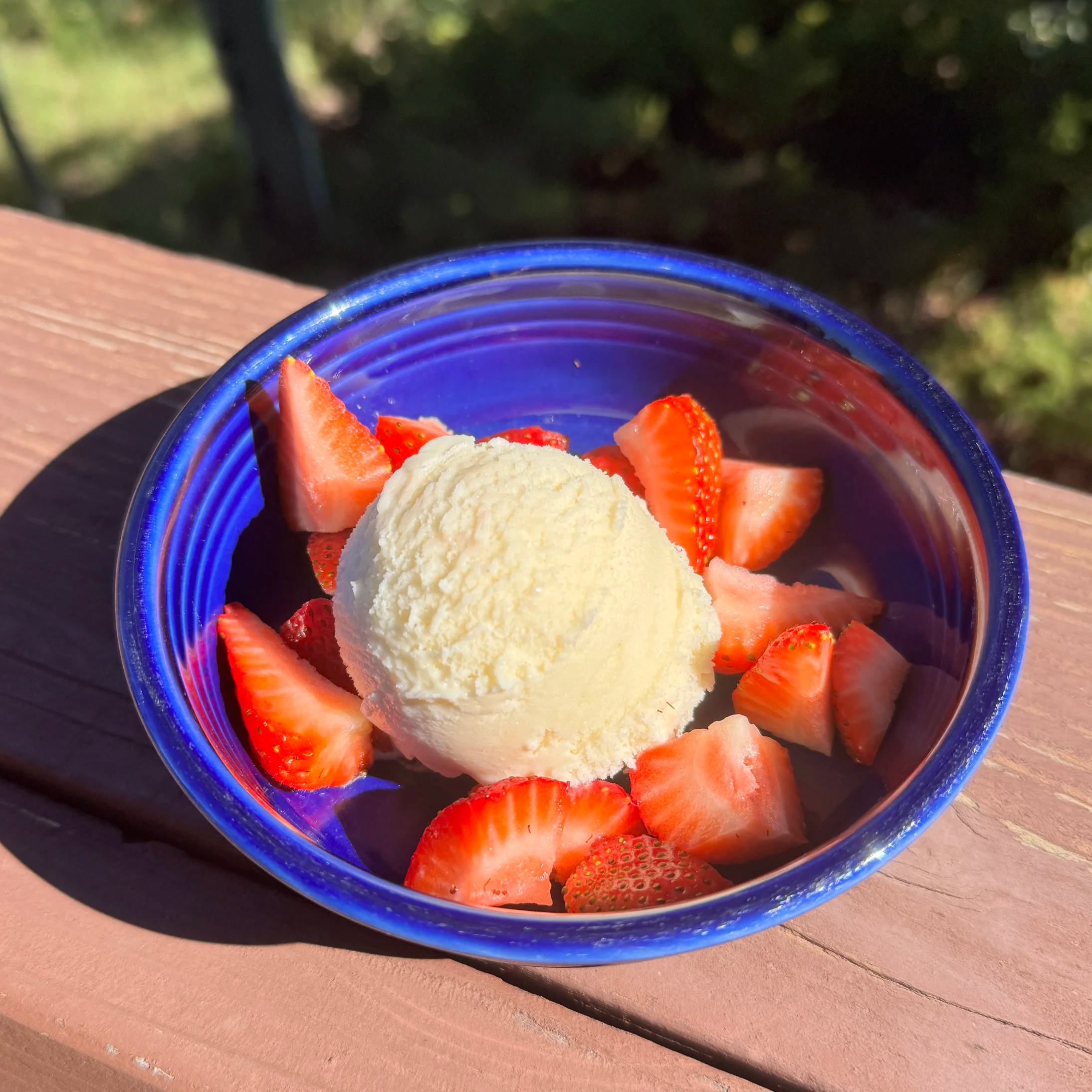
Ingredients
4 pasteurized eggs
2¼ cups organic, raw sugar
4½ teaspoons pure vanilla extract
½ teaspoon sea salt
4 cups organic heavy cream
5 cups grass-fed whole milk
Before You Get Churning...
About an hour before you start:
Place the clean ice cream canister and dasher in the freezer.
Fill the wooden bucket about two-thirds full with water and let it soak. This helps the wood expand, creating a tighter seal so you don't end up with leaks while churning.

Let's Make Some Ice Cream!
In a large bowl, cream together the eggs and sugar until the mixture is light, fluffy, and slightly pale.
Stir in the vanilla, sea salt, heavy cream, and whole milk until everything is well combined.
Pour the mixture into your ice cream maker's canister.
Want a completely full canister? We usually make an extra half batch!
Pack the outside of the canister with alternating layers of:
2 parts ice
1 part rock salt
As the ice melts during churning, keep adding more ice and rock salt to maintain the level.
Churn according to your ice cream maker's directions (typically 40–60 minutes, depending on the weather and outside temperature).
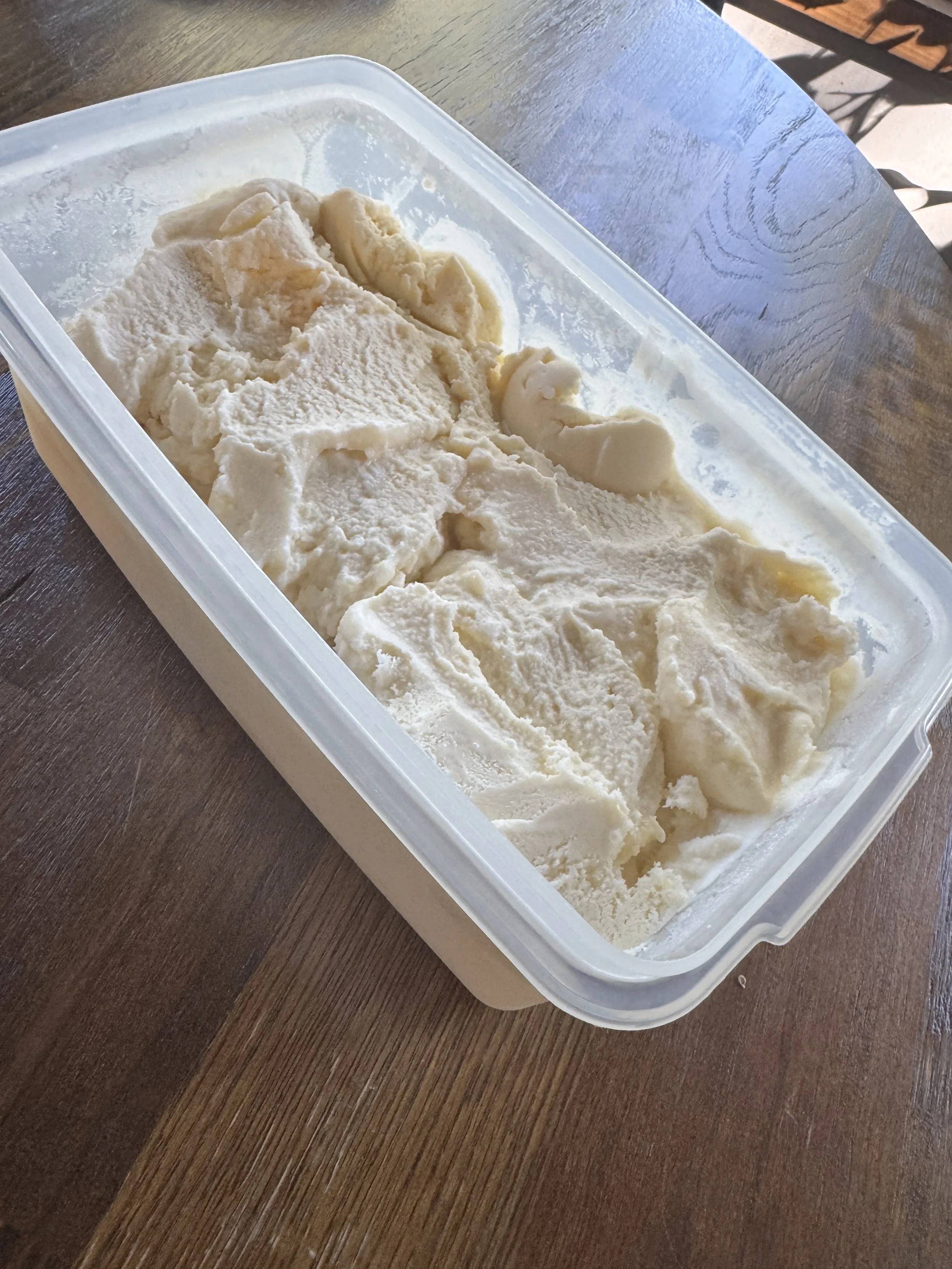
How Do You Know It's Ready?
Your homemade ice cream is done when:
🍦 The crank gets noticeably harder to turn.
🍦 The ice cream has reached a delicious soft-serve consistency.
Prefer a firmer scoop? Transfer it to a freezer-safe container and freeze for another 2–4 hours before serving.
A Little Reminder
Healthy eating isn't about perfection. It's about creating sustainable habits that support your health while leaving room for celebration, traditions, and homemade treats.
So savor a bowl, enjoy every bite, and remember: one scoop doesn't define your health, but your everyday choices do.
Happy churning! 🍨
Functional Medicine Fertility Benefits of Homemade Ice Cream Ingredients
While homemade ice cream is still a celebratory dessert, choosing high-quality ingredients can make it a more nourishing option compared with many ultra-processed alternatives. From a functional medicine perspective, fertility health is supported by overall dietary patterns that provide adequate energy, high-quality proteins and fats, micronutrients, and foods that support hormonal balance, mitochondrial function, and healthy inflammation regulation. This recipe includes several nutrient-dense ingredients that contribute important building blocks for reproductive health when enjoyed as part of a balanced, nutrient-rich lifestyle.
Eggs: Choline, B Vitamins, and Hormone Support
Eggs are one of the most nutrient-dense foods for fertility because they provide high-quality protein, choline, selenium, iodine, vitamin B12, and fat-soluble vitamins. Choline is particularly important before and during pregnancy because it supports fetal brain and neural tube development, methylation pathways, and cellular membrane formation. Adequate choline intake may also influence ovarian function and early embryonic development, making it a key nutrient during the preconception period. Additionally, the protein and amino acids found in eggs provide the building blocks needed for hormone production, tissue repair, and healthy reproductive function (1,2).
Grass-Fed Whole Milk and Organic Heavy Cream: Healthy Fats and Fat-Soluble Vitamins
Fertility requires adequate intake of healthy fats because cholesterol serves as the foundation for steroid hormones, including estrogen, progesterone, and testosterone. Dairy products, particularly full-fat varieties, provide saturated fats, fat-soluble vitamins A and D, calcium, and bioavailable nutrients that support endocrine function. Research from the Nurses' Health Study found that higher intake of low-fat dairy foods was associated with a greater risk of ovulatory infertility, while full-fat dairy intake was associated with improved ovulatory outcomes, potentially due to differences in fatty acid composition and hormone content (3).
From a functional medicine perspective, choosing grass-fed dairy may provide additional benefits because grass-fed milk has been shown to contain higher concentrations of certain beneficial fatty acids, including omega-3 fatty acids and conjugated linoleic acid (CLA), compared with conventional dairy. Omega-3 fatty acids support healthy inflammatory pathways, ovarian function, and reproductive hormone signaling, while CLA has demonstrated potential metabolic benefits (4).
Organic Sugar: Energy Availability and the Importance of Metabolic Balance
Sugar often receives negative attention in fertility discussions, but glucose is an essential fuel source for the body, reproductive tissues, and developing embryos. The functional medicine focus is not eliminating carbohydrates entirely, but supporting metabolic flexibility, insulin sensitivity, and balanced blood sugar regulation. Just remember that this is not an excuse to overconsume sugar, but to enjoy it on special occasions. Chronic high intake of refined sugars and diets with a high glycemic load may contribute to insulin resistance and inflammation, which are associated with conditions such as polycystic ovary syndrome (PCOS), a common cause of infertility. Enjoying a homemade dessert with a balanced meal and adequate protein and fat can help reduce glucose spikes compared with consuming highly processed sweets alone (5).
Pure Vanilla Extract: Antioxidant Support
Vanilla contains naturally occurring polyphenols and antioxidant compounds that may help protect cells from oxidative stress. Oxidative stress is an important consideration in fertility because excessive reactive oxygen species can negatively affect oocyte quality, sperm function, embryo development, and implantation. While the amount of vanilla consumed in a serving of ice cream is small, it represents another example of how whole-food ingredients can contribute small amounts of beneficial plant compounds within an overall antioxidant-rich diet (6).
Sea Salt: Mineral Balance and Thyroid Support
Quality sea salt provides trace minerals, including small amounts of magnesium, potassium, and other electrolytes. Adequate mineral balance is important for cellular communication, hydration, nerve function, and thyroid health. The thyroid plays an important role in fertility, as thyroid hormones influence menstrual regularity, ovulation, implantation, and early pregnancy development. Functional medicine approaches often emphasize adequate intake of iodine and selenium, nutrients required for thyroid hormone synthesis and metabolism, although individualized assessment is important because excessive iodine intake may also be problematic for some individuals (7).
Functional Medicine Fertility Takeaway
Fertility nutrition is not about perfection or eliminating every enjoyable food. It is about building a strong nutritional foundation that supports hormone production, mitochondrial health, egg and sperm quality, blood sugar regulation, and a healthy inflammatory response. A homemade dessert made with quality ingredients can fit beautifully into a fertility-supportive lifestyle when paired with nutrient-dense meals, adequate protein, movement, restorative sleep, and personalized care.
The goal is not restriction. The goal is nourishment, balance, and creating a lifestyle that supports both
References
Wallock, L. M., Tamura, T., Mayr, C. A., Ames, B. N., & Ames, R. N. (2000). Low choline intakes in pregnant women: Association with elevated homocysteine concentrations. The American Journal of Clinical Nutrition, 72(6), 1580–1585. https://doi.org/10.1093/ajcn/72.6.1580
Zeisel, S. H., & da Costa, K. A. (2009). Choline: An essential nutrient for public health. Nutrition Reviews, 67(11), 615–623. https://doi.org/10.1111/j.1753-4887.2009.00254.x
Chavarro, J. E., Rich-Edwards, J. W., Rosner, B., & Willett, W. C. (2007). A prospective study of dairy foods intake and anovulatory infertility. Human Reproduction, 22(5), 1340–1347. https://doi.org/10.1093/humrep/dem019
Benbrook, C. M., Davis, D. R., Heins, B. J., Latif, M. A., Leifert, C., Petrokofsky, G., Butler, G., & others. (2013). Enhancing the fatty acid profile of milk through sustainable production methods. Advances in Nutrition, 4(5), 497–506. https://doi.org/10.3945/an.113.003640
Barrea, L., Verde, L., Camajani, E., Ceriani, F., Frias-Toral, E., Vetrani, C., Colao, A., & Savastano, S. (2021). Nutrition and polycystic ovary syndrome: The role of the Mediterranean diet and functional foods. Nutrients, 13(9), 3021. https://doi.org/10.3390/nu13093021
Agarwal, A., Gupta, S., & Sharma, R. (2012). Oxidative stress and its implications in female infertility: A clinician’s perspective. Reproductive BioMedicine Online, 25(1), 1–9. https://doi.org/10.1016/j.rbmo.2012.03.009
Alexander, E. K., Pearce, E. N., Brent, G. A., Brown, R. S., Chen, H., Dosiou, C., Grobman, W. A., Laurberg, P., Lazarus, J. H., Mandel, S. J., Peeters, R. P., & Sullivan, S. (2017). 2017 Guidelines of the American Thyroid Association for the diagnosis and management of thyroid disease during pregnancy and the postpartum. Thyroid, 27(3), 315–389. https://doi.org/10.1089/thy.2016.0457