
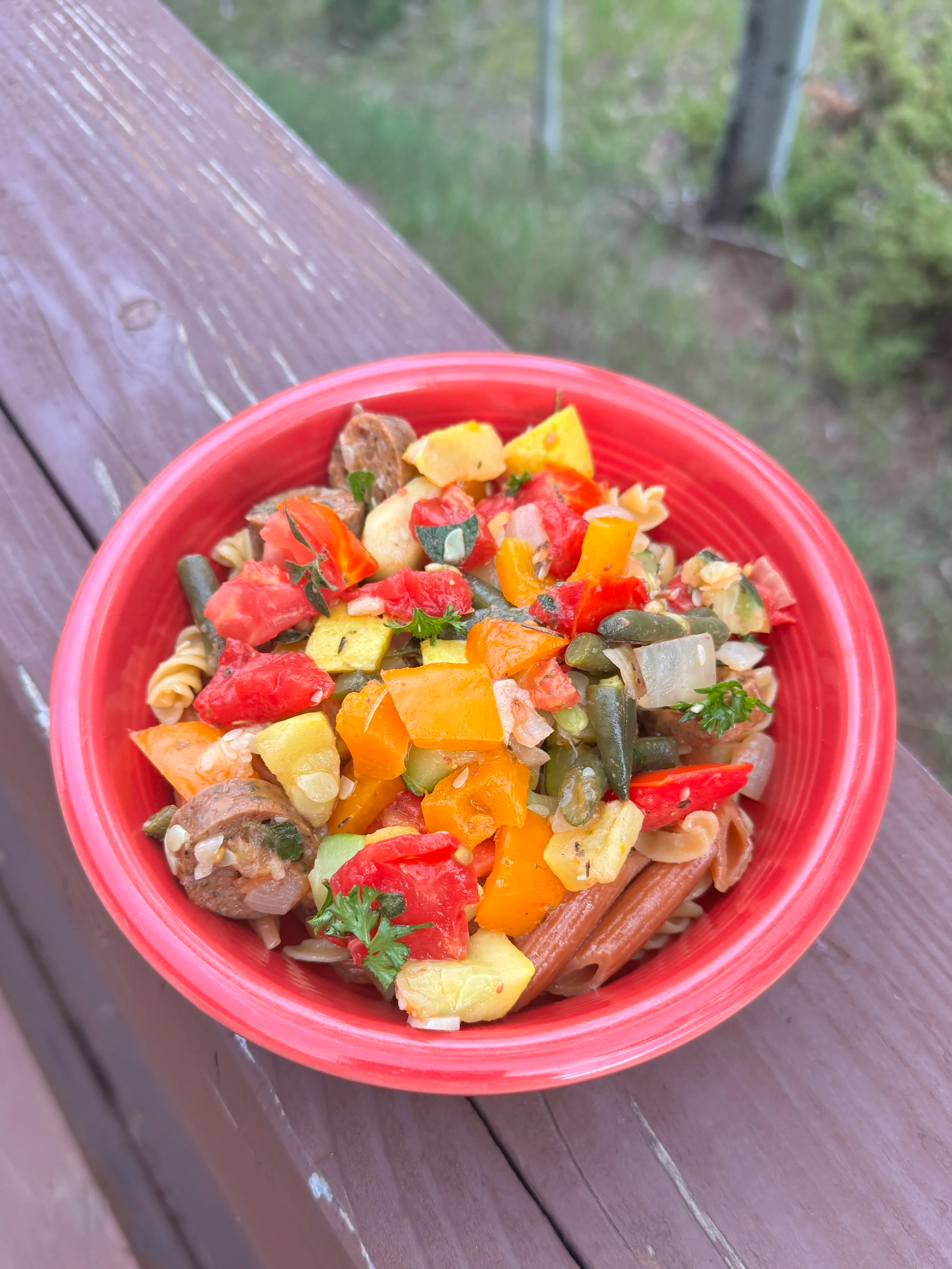
Farmstand Summer Pasta with Mozzarella & Chicken Sausage
Another recipe win from the farmer’s market! When I first learned this recipe, it was incredibly simple: penne pasta, olive oil, garlic, Roma tomatoes, mozzarella and fresh basil. But over the years, as I’ve started enjoying more and more vegetables, I began incorporating them into this dish. What started as a simple pasta recipe has turned into one of my favorite ways to use the abundance of fresh summer produce.
What I love most about this recipe is how flexible it is. I can walk through the farmer’s market, pick up whatever looks good, and add it to the pasta. The fresh tomatoes, garden herbs, and vegetables make it light enough for a hot summer day, but the sausage and mozzarella make it hearty enough to be a complete meal.
I also love recipes like this because they make it easier to increase the diversity of plant foods in your diet without making it feel like work. One of my personal goals is to work toward 30–35 different plant foods each week, since greater plant diversity can help support a more diverse gut microbiome. Every vegetable, herb, fruit, nut, seed, whole grain, and legume counts toward that total. This recipe alone gives you several different plant foods in one delicious, easy summer meal.
Ingredients
4 Sabatino’s Paleo Organic Chicken Sausages with Organic Basil & Cracked Black Pepper, sliced (or locally made Italian sausage)
1 medium yellow or sweet onion, diced
1 zucchini, diced
1 yellow squash, diced
1 cup fresh green beans, trimmed and cut into 1-inch pieces
1 orange bell pepper, chopped
3 medium homegrown tomatoes, chopped (or 5 Roma tomatoes)
6 cloves garlic, minced
Fresh basil, chopped
Fresh oregano, chopped
Fresh parsley, chopped
8 oz mozzarella cheese pearls
12 oz gluten-free pasta (I used a combination of red lentil penne & Veggie Craft Rotini)
2–3 tablespoons extra-virgin olive oil
Sea salt and freshly cracked black pepper, to taste
Optional Toppings
Black olives
Shredded parmesan cheese
Crushed red pepper
Directions
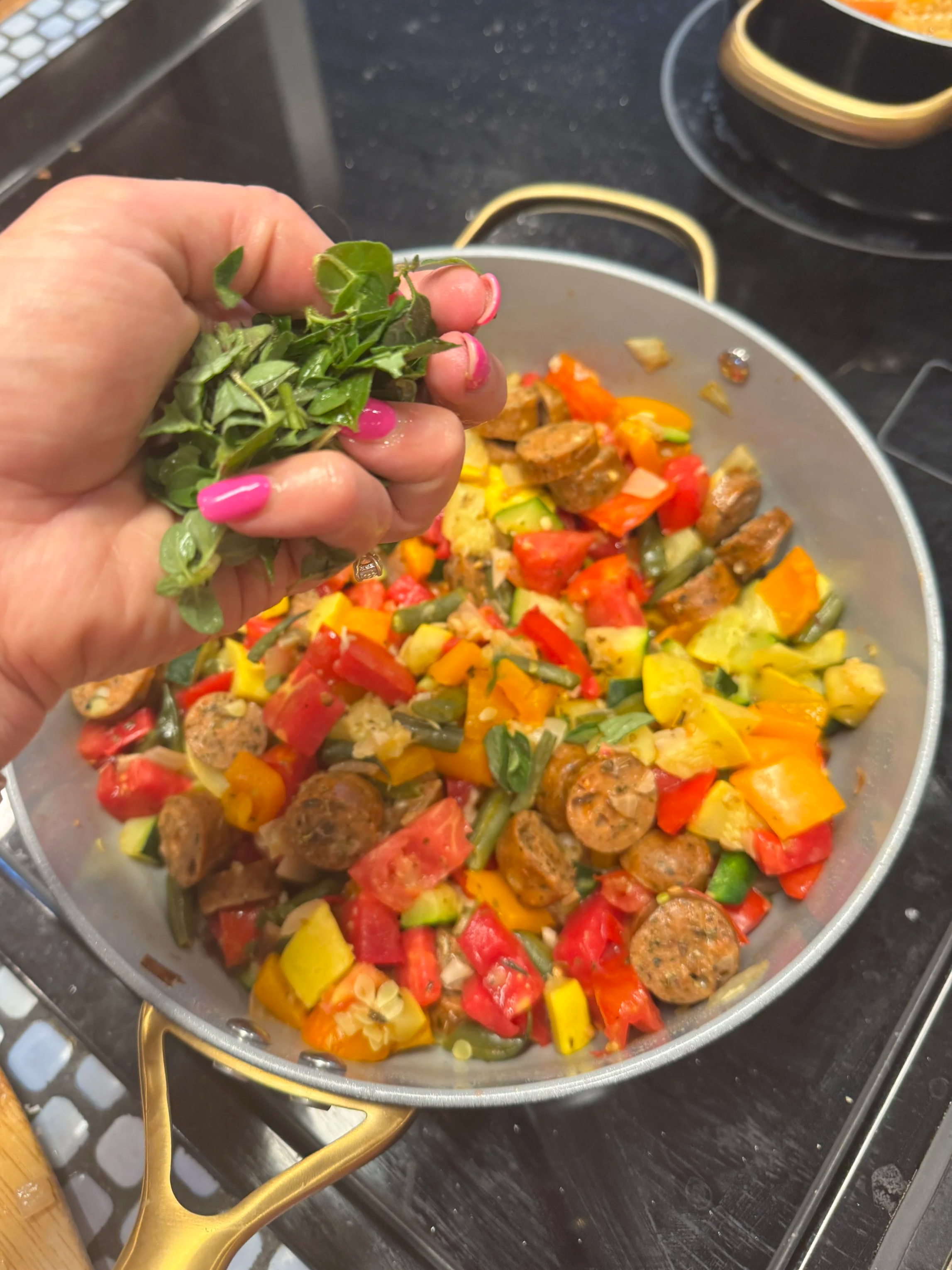
Sauté the onion and brown sausage: Add another drizzle of olive oil to the skillet. Add the diced onion and sliced sausage and sauté for 2–3 minutes over medium heat, until sausage is warm and onion begins to soften.
Cook the pasta: Prepare the gluten-free pasta according to package directions. Reserve about ½ cup of pasta water, then drain.
Add the vegetables to sauté: Add the green beans, zucchini and yellow squash and sauté for 3–4 minutes. Add the orange bell pepper and garlic continue cooking for another 3–4 minutes, keeping the vegetables slightly crisp.
Add tomatoes and fresh herbs: Stir in the tomatoes and minced garlic. Cook for 2–3 minutes, allowing the tomatoes to soften and release their juices. Stir in the fresh basil, oregano, and parsley. Season with sea salt and freshly cracked black pepper.
Bring it together: Return the sausage to the skillet and add the cooked pasta. Toss everything together, adding a splash of reserved pasta water and additional olive oil as needed.
Finish with mozzarella: Gently fold in the mozzarella pearls just before serving. Allow them to soften slightly from the warmth of the pasta.
Add your favorite toppings. Enjoy!
Why We Love This Recipe
This recipe is a perfect example of how a simple meal can evolve as you start incorporating more whole foods into your diet. I love recipes like this because they make it easy to increase the variety of plant foods in your diet without making healthy eating feel complicated. The combination of vegetables, fresh herbs, quality protein, healthy fats, and a moderate portion of gluten-free pasta creates a satisfying meal while providing a wide range of vitamins, minerals, fiber, and plant compounds. Dietary patterns that emphasize whole and minimally processed foods, vegetables, healthy fats, and high-quality protein are associated with better overall health and may also support reproductive health (1, 2).
This recipe also fits beautifully into a Mediterranean-inspired way of eating, which emphasizes vegetables, fruits, whole grains, legumes, nuts, seeds, olive oil, and minimally processed foods. Research examining dietary patterns and fertility suggests that overall diet quality may be more important than focusing on any one particular food (1, 2).
Functional Nutrition Benefits
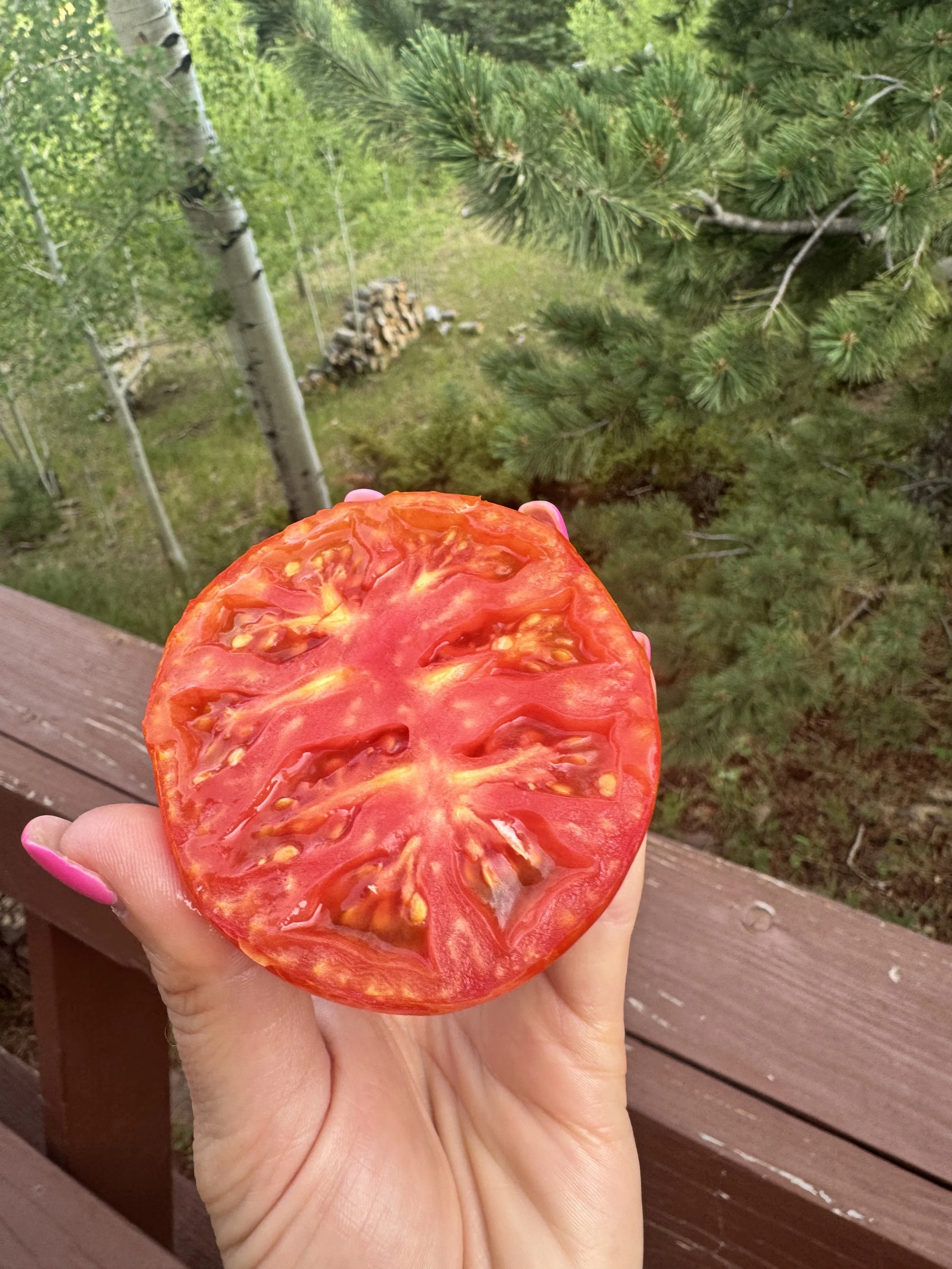
Tomatoes: Lycopene & Antioxidant Support
Fresh tomatoes provide lycopene, a carotenoid with antioxidant properties that supports cellular health. Lycopene and other carotenoids are involved in antioxidant defense, and research has explored their potential relationship with reproductive health, particularly male reproductive health (4, 5). Pairing tomatoes with olive oil and mozzarella also provides dietary fat alongside lycopene, which may support the absorption of fat-soluble carotenoids.
Colorful Vegetables: Phytonutrients & Fiber
Zucchini, yellow squash, green beans, and bell pepper provide fiber, vitamins, minerals, and a variety of phytonutrients. Eating a greater variety of plant foods also helps nourish a diverse gut microbiome while providing different nutrients based on their colors (6).
Garlic: Sulfur Compounds & Antioxidant Support
Fresh garlic contains sulfur compounds, including allicin, that have antioxidant and other beneficial properties (7). It’s an easy way to add both flavor and plant compounds to this dish.
Fresh Herbs: Plant Diversity
Fresh basil, oregano, and parsley add flavor along with a variety of polyphenols and other powerful plant compounds that contribute to the overall diversity of phytochemicals in the diet. Fresh herbs are another simple way to increase plant diversity throughout the week.
Extra Virgin Olive Oil: Healthy Fats & Mediterranean Nutrition
Extra virgin olive oil provides monounsaturated fats and polyphenols and is a key component of the Mediterranean dietary pattern, which is associated with metabolic and cardiovascular health (8). Olive oil also provides dietary fat alongside vegetables, which can support the absorption of fat-soluble compounds such as carotenoids.
Chicken Sausage & Mozzarella: Protein & Satiety
Chicken sausage and mozzarella add protein and fat, helping make this pasta a more balanced and satisfying meal. Pairing protein and healthy fats with carbohydrates can also support more balanced blood sugar and satiety. For a fertility-supportive eating pattern, I generally want meals to include adequate protein, healthy fats, colorful plants, and quality carbohydrates rather than allowing one macronutrient to dominate the meal.
How This Recipe Supports Fertility
Fertility is influenced by many factors, including age, ovulation, metabolic health, nutrient status, inflammation, and overall health. There isn't one food or recipe that can improve fertility on its own. Instead, I like to look at how individual meals contribute to the bigger dietary pattern. Research examining nutrition and fertility increasingly suggests that overall dietary quality and dietary patterns may play an important role in reproductive health (1, 2).
This recipe includes many of the foods emphasized in Mediterranean-style eating: vegetables, herbs, olive oil, tomatoes, and minimally processed protein. In a study of women undergoing IVF, greater adherence to a Mediterranean dietary pattern was associated with higher rates of successful outcomes among non-obese women, although observational research like this cannot prove that the diet itself caused the improved outcomes (3). Other research has also found associations between healthier dietary patterns and fertility, including reduced difficulty conceiving (9).
The abundance of colorful vegetables and tomatoes also makes this a naturally antioxidant-rich meal. Oxidative stress is relevant to reproductive health because reproductive cells, including eggs and sperm, are vulnerable to oxidative damage. A diet rich in naturally occurring antioxidants from fruits, vegetables, herbs, and other plant foods can help provide the nutrients and plant compounds involved in the body's antioxidant defenses (1, 5).
I also love this recipe from a metabolic perspective. Rather than serving a large bowl of pasta on its own, we're pairing the carbohydrates with protein from chicken sausage and mozzarella, healthy fats from olive oil and cheese, and fiber-rich vegetables. Supporting healthy metabolic function and blood sugar regulation can be an important part of creating a foundation for healthy hormone function and ovulation. The relationship between diet, metabolic health, and fertility is complex, but research supports paying attention to overall dietary quality rather than focusing on one isolated nutrient or "fertility food" (1, 2).
Finally, this recipe is an easy way to work toward greater plant diversity throughout the week. The vegetables and herbs in this one meal give you multiple different plant foods, and I encourage my patients to think beyond simply counting servings of vegetables. Variety matters, too. Rotating different vegetables, fruits, herbs, legumes, nuts, seeds, and whole grains throughout the week provides different types of dietary fiber and plant compounds that can interact with the gut microbiome (6).
For me, fertility-supportive nutrition isn't about eating a perfect diet or obsessing over individual "fertility foods." It's about consistently nourishing the body with adequate protein, healthy fats, colorful plants, fiber, and nutrient-dense whole foods. This summer pasta is a delicious example of what that can look like in real life.
References
Gaskins, A. J., & Chavarro, J. E. (2018). Diet and fertility: A review. American Journal of Obstetrics and Gynecology, 218(4), 379–389. https://doi.org/10.1016/j.ajog.2017.08.010
Chiu, Y. H., Chavarro, J. E., & Souter, I. (2018). Diet and female fertility: Doctor, what should I eat? Fertility and Sterility, 110(4), 560–569. https://doi.org/10.1016/j.fertnstert.2018.05.027
Karayiannis, D., Kontogianni, M. D., Mendorou, C., Mastrominas, M., & Yiannakouris, N. (2018). Adherence to the Mediterranean diet and IVF success rate among non-obese women attempting fertility. Human Reproduction, 33(3), 494–502. https://doi.org/10.1093/humrep/dey003
Story, E. N., Kopec, R. E., Schwartz, S. J., & Harris, G. K. (2010). An update on the health effects of tomato lycopene. Annual Review of Food Science and Technology, 1, 189–210. https://doi.org/10.1146/annurev.food.102308.124120
Agarwal, A., Virk, G., Ong, C., & du Plessis, S. S. (2014). Effect of oxidative stress on male reproduction. The World Journal of Men's Health, 32(1), 1–17. https://doi.org/10.5534/wjmh.2014.32.1.1
Makki, K., Deehan, E. C., Walter, J., & Bäckhed, F. (2018). The impact of dietary fiber on gut microbiota in host health and disease. Cell Host & Microbe, 23(6), 705–715. https://doi.org/10.1016/j.chom.2018.05.012
Borlinghaus, J., Albrecht, F., Gruhlke, M. C. H., Nwachukwu, I. D., & Slusarenko, A. J. (2014). Allicin: Chemistry and biological properties. Molecules, 19(8), 12591–12618. https://doi.org/10.3390/molecules190812591
Dinu, M., Pagliai, G., Casini, A., & Sofi, F. (2018). Mediterranean diet and multiple health outcomes: An umbrella review of meta-analyses of observational studies and randomised trials. European Journal of Clinical Nutrition, 72, 30–43. https://doi.org/10.1038/ejcn.2017.58
Toledo, E., Lopez-del Burgo, C., Ruiz-Zambrana, A., Donazar, M., Navarro-Blasco, I., Martínez-González, M. A., & de Irala, J. (2011). Dietary patterns and difficulty conceiving: A nested case-control study. Fertility and Sterility, 96(5), 1149–1153. https://doi.org/10.1016/j.fertnstert.2011.08.034