
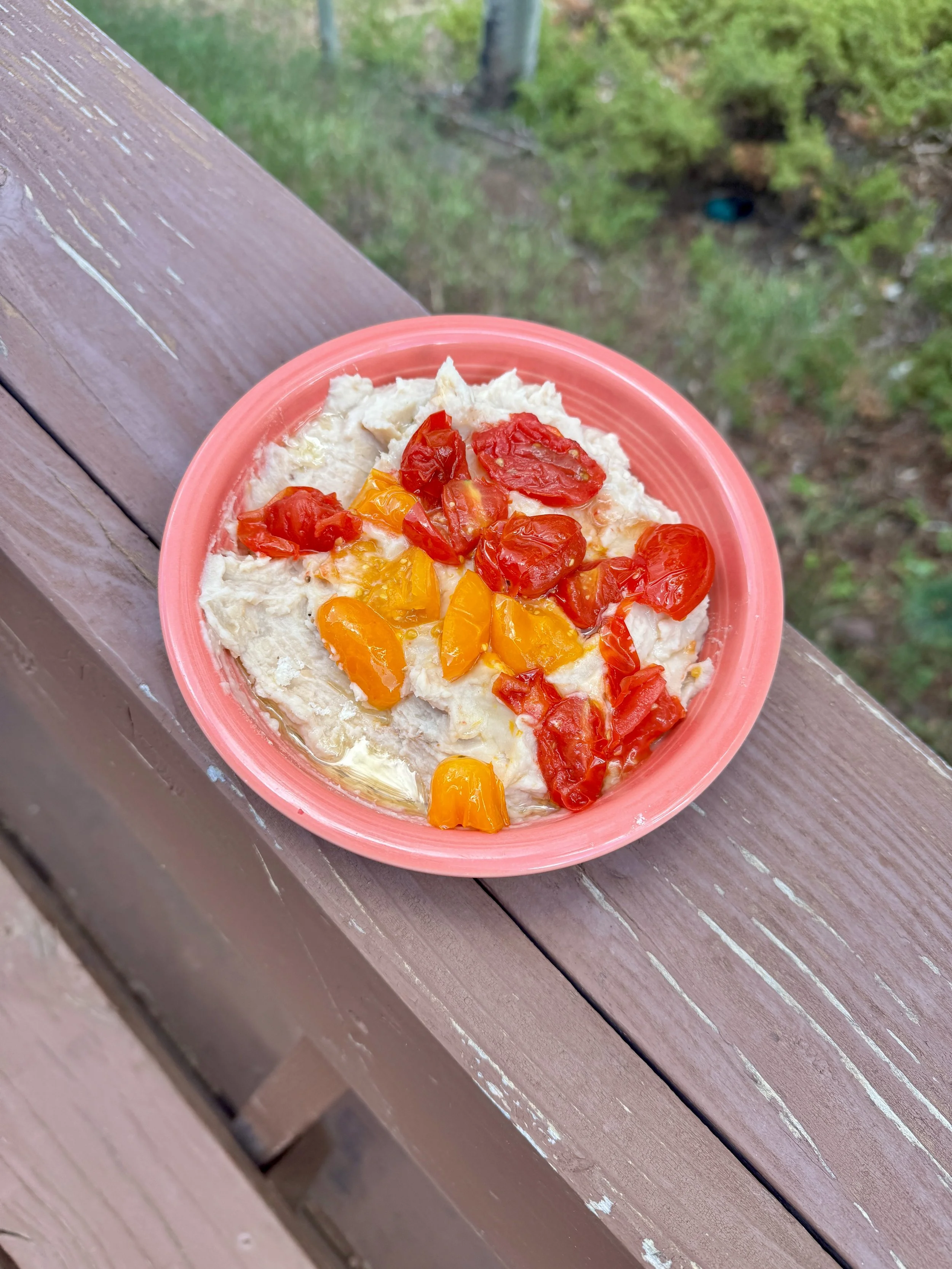
Aubrey’s Roasted Garlic & White Bean Whip
When it comes to healthy eating, the simplest recipes are often the most nourishing. This Aubrey’s Roasted Garlic & White Bean Whip is proof that a handful of wholesome ingredients can come together to create something creamy, flavorful, and packed with nutrition. This recipe is inspired by the Mediterranean way of eating, which is an approach consistently associated with better heart health, lower inflammation, balanced blood sugar, and overall longevity (1,2).
One of my favorite things to do is host dinners and gatherings. There is something special about bringing people together around a table, sharing meaningful conversations, and creating memories over a nourishing meal. My love for hosting started early as I worked in hospitality and marketing. Those experiences continued to shape my appreciation for gathering people together.

Today, that passion has carried over into my personal life through creating healthy, beautiful meals for family and friends—whether gathered poolside during warm summer evenings, enjoying the peacefulness of the mountains, or celebrating around the holidays.
This week, we hosted a dinner party, and my friend Aubrey brought this incredible dish to share. Not only was it delicious and beautiful, but it also perfectly represented the kind of food we love to highlight at ViaVitae Functional Health: simple, nourishing ingredients that support the body while bringing people together. Food is more than fuel. It is connection, celebration, and one of the many ways we can care for ourselves and each other. We hope you enjoy this recipe as much as we did!
Whether you're looking for a satisfying afternoon snack, a healthy appetizer, or a nutrient-dense spread for sandwiches and wraps, this recipe checks every box.
Ingredients
For the Bean Dip
1 (15-ounce) can cannellini or Great Northern beans, drained and rinsed
1 whole head garlic
2–3 tablespoons extra virgin olive oil, divided
Juice of 1 lemon
½ teaspoon sea salt (or to taste)
¼ teaspoon freshly ground black pepper
2–4 tablespoons water, as needed for desired consistency
For the Topping
1 cup cherry tomatoes
1 teaspoon olive oil
2 tablespoons toasted pine nuts (optional)
2 tablespoons fresh basil, thinly sliced (optional)
Flaky sea salt and cracked black pepper, to taste
Instructions
Roast the garlic. Preheat the oven to 400°F (200°C). Slice the top off the garlic head, drizzle with 1 teaspoon olive oil, wrap in foil, and roast for 50–60 minutes until soft and caramelized. Let cool slightly.
Blister the tomatoes. Heat 1 teaspoon olive oil in a skillet over medium-high heat. Add tomatoes and cook for 4–6 minutes, shaking occasionally, until they begin to blister and burst. Remove from heat.
Blend the dip. In a food processor or blender, combine the beans, roasted garlic cloves, remaining olive oil, lemon juice, salt, and pepper. Blend until smooth, adding water 1 tablespoon at a time until creamy.
Assemble. Spread the white bean dip onto a serving plate or into a shallow bowl. Top with blistered tomatoes, toasted pine nuts, fresh basil, an extra drizzle of olive oil, and flaky sea salt if desired.
This is an old video, but I love using an iron skillet to blister my tomatoes!
Serving Suggestions
Whole grain or gluten-free crackers
Toasted sourdough or crostini
Fresh vegetables (cucumbers, carrots, bell peppers)
As a sandwich or wrap spread
Why We Love This Recipe
Many packaged dips and spreads contain refined oils, added sugars, excess sodium, and preservatives. Preparing food at home allows you to control the quality of ingredients while increasing your intake of nutrient-dense whole foods.
This recipe highlights the power of combining macronutrients: fiber-rich carbohydrates from beans, healthy fats from olive oil and pine nuts, and plant-based antioxidants from garlic, tomatoes, lemon, and basil. Meals that include fiber, protein, and healthy fats can support satiety, blood sugar regulation, and overall metabolic health (3).
Functional Nutrition Benefits
White Beans: Gut Health & Blood Sugar Support White beans provide plant-based protein, fiber, folate, magnesium, and potassium. Their fiber and resistant starch support digestive health by nourishing beneficial gut bacteria and may help promote balanced blood sugar responses after meals (4, 3).
Roasted Garlic: Antioxidant Support Garlic contains sulfur compounds, including allicin-related compounds, that have been studied for their antioxidant and immune-supportive properties. Roasting enhances garlic’s flavor while preserving many of its beneficial plant compounds (5).
Extra Virgin Olive Oil: Mediterranean Wellness A cornerstone of the Mediterranean diet, extra virgin olive oil provides monounsaturated fats and polyphenols that support cardiovascular health and healthy inflammatory pathways. Healthy fats also help improve absorption of nutrients from plant foods (2).
Lemon: Vitamin C Support Fresh lemon juice adds vitamin C, an antioxidant that supports immune function, collagen production, and the absorption of plant-based iron from foods like beans (C6).
Tomatoes, Basil & Pine Nuts: Antioxidant-Rich Toppings Blistered tomatoes provide lycopene, a carotenoid antioxidant associated with cellular and cardiovascular health. Basil and pine nuts add additional plant compounds, healthy fats, vitamin E, and minerals that complement this Mediterranean-inspired dish (7,2).
How This Recipe Supports Fertility
Fertility is influenced by many factors, including nutrient status, metabolic health, inflammation balance, and oxidative stress. A nutrient-dense eating pattern that emphasizes whole foods, colorful plants, healthy fats, and adequate fiber can help support the body’s natural reproductive processes.
The Mediterranean dietary pattern, which emphasizes vegetables, legumes, nuts, seeds, olive oil, and minimally processed foods, has been associated with improved fertility outcomes, including healthier ovulatory function and improved outcomes among women undergoing fertility treatment (8,9).
The antioxidants found throughout this recipe help support protection against oxidative stress, which can affect reproductive cells, including eggs and sperm. Antioxidant-rich dietary patterns may support cellular health and create a more favorable environment for conception (10).
Additionally, the fiber-rich ingredients in this dish support gut health and metabolic balance. Healthy glucose regulation and a balanced inflammatory response are important foundations for hormone health, ovulation, and reproductive wellness (11,4).
Incorporating recipes like this into a fertility-supportive lifestyle is one way to provide the body with the nutrients it needs to support healthy hormone function, cellular health, and the journey toward conception.
References
Dinu, M., Pagliai, G., Casini, A., & Sofi, F. (2018). Mediterranean diet and multiple health outcomes: An umbrella review of meta-analyses of observational studies and randomized trials. European Journal of Clinical Nutrition, 72, 30–43. https://doi.org/10.1038/ejcn.2017.58
Estruch, R., Ros, E., Salas-Salvadó, J., et al. (2018). Primary prevention of cardiovascular disease with a Mediterranean diet supplemented with extra-virgin olive oil or nuts. New England Journal of Medicine, 378(25), e34. https://doi.org/10.1056/NEJMoa1800389
Reynolds, A., Mann, J., Cummings, J., Winter, N., Mete, E., & Te Morenga, L. (2019). Carbohydrate quality and human health: A series of systematic reviews and meta-analyses. The Lancet, 393(10170), 434–445. https://doi.org/10.1016/S0140-6736(18)31809-9
Makki, K., Deehan, E. C., Walter, J., & Bäckhed, F. (2018). The impact of dietary fiber on gut microbiota in host health. Cell Host & Microbe, 23(6), 705–715. https://doi.org/10.1016/j.chom.2018.05.012
Borlinghaus, J., Albrecht, F., Gruhlke, M. C. H., Nwachukwu, I. D., & Slusarenko, A. J. (2014). Allicin: Chemistry and biological properties. Molecules, 19(8), 12591–12618. https://doi.org/10.3390/molecules190812591
Carr, A. C., & Maggini, S. (2017). Vitamin C and immune function. Nutrients, 9(11), 1211. https://doi.org/10.3390/nu9111211
Story, E. N., Kopec, R. E., Schwartz, S. J., & Harris, G. K. (2010). An update on the health effects of tomato lycopene. Annual Review of Food Science and Technology, 1, 189–210. https://doi.org/10.1146/annurev.food.102308.124120
Karayiannis, D., Kontogianni, M. D., Mendorou, C., Mastrominas, M., & Yiannakouris, N. (2018). Adherence to the Mediterranean diet and IVF success rate among non-obese women attempting fertility. Human Reproduction, 33(3), 494–502. https://doi.org/10.1093/humrep/dey003
Toledo, E., Lopez-del Burgo, C., Ruiz-Zambrana, A., Donazar, M., Navarro-Blasco, I., Martínez-González, M. A., & de Irala, J. (2011). Dietary patterns and difficulty conceiving: A nested case-control study. Fertility and Sterility, 96(5), 1149–1153. https://doi.org/10.1016/j.fertnstert.2011.08.034
Agarwal, A., Virk, G., Ong, C., & du Plessis, S. S. (2014). Effect of oxidative stress on male reproduction. The World Journal of Men’s Health, 32(1), 1–17. https://doi.org/10.5534/wjmh.2014.32.1.1
Gaskins, A. J., & Chavarro, J. E. (2018). Diet and fertility: A review. American Journal of Obstetrics and Gynecology, 218(4), 379–389. https://doi.org/10.1016/j.ajog.2017.08.010